Find Recovery Houses in South Carolina
Sober Living in South Carolina: Find a Certified Sober House Near You
South Carolina offers a growing network of sober living homes that provide safe, structured, and supportive housing for people in recovery. These homes help individuals build stability, accountability, and daily routines while staying connected to treatment, work, family, and community supports. Many homes across the state follow recognized quality standards and are independently operated by local providers.
Ready to begin your journey?
Browse Sober Homes in South Carolina →
What Is Sober Living?
Sober living homes are alcohol- and drug-free residences designed to support people in recovery. They are not treatment centers or clinical facilities. Instead, they offer a stable living environment with shared expectations, peer support, and accountability that can help residents strengthen recovery skills in everyday life.
People often choose sober living in South Carolina after completing treatment, during outpatient care, or while rebuilding stability after incarceration or a major life transition.
Why Choose South Carolina for Sober Living?
South Carolina offers supportive recovery communities plus state-connected resources that can make sober living more accessible and easier to navigate, especially when you’re looking for safe housing that supports daily structure (not a substitute for clinical care).
- Recovery Housing Assistance (DAODAS): South Carolina’s DAODAS Recovery Housing Assistance can help eligible individuals with sober living costs through approved pathways (program rules apply).
- Certified home verification (SCARR): The South Carolina Alliance for Recovery Residences (SCARR) supports quality standards and provides a way to verify certified recovery residences.
- State recovery housing investment (HUD RHP): South Carolina participates in the HUD Recovery Housing Program (RHP), coordinated through DAODAS, to expand recovery housing access and stability supports.
🤝 Start a Sober House in South Carolina →
Key Features of Sober Living Homes in South Carolina
While each home is unique, many sober living homes in South Carolina share common features:
- Alcohol- and drug-free living environment
- Clear expectations outlined in written house rules
- Peer accountability and daily structure
- Connection to community recovery supports
- Leadership or guidance from trained house mentors or senior residents
- Emphasis on personal responsibility, employment, and life skills
Sober living supports recovery but does not replace clinical treatment or medical care.
South Carolina Alliance for Recovery Residences (SCARR) Certified Sober Homes in South Carolina
South Carolina recognizes certified recovery residences through the South Carolina Alliance for Recovery Residences (SCARR), the state’s recovery residence certification body, and the National Alliance for Recovery Residences (NARR) affiliate, which promotes quality, safety, and ethical standards for sober living homes statewide.
Why Choose a SCARR-Certified Sober House?
Certification helps residents and families identify homes that meet established recovery housing standards.
- Commitment to resident safety and ethical operations
- Alignment with nationally recognized recovery residence standards
- Transparency in policies, fees, and expectations
- Increased confidence for referrals from treatment providers and agencies
About SCARR Certification
SCARR certification generally reviews housing operations, resident rights, safety practices, and adherence to recovery-oriented principles. As a NARR affiliate, SCARR aligns with national recovery residence standards while addressing state-specific priorities and oversight.
Types of Sober Living Homes in South Carolina
South Carolina offers a range of sober living options designed to meet people where they are in recovery. From post-treatment transitions to reentry support, these homes provide structured, substance-free housing that supports stability, accountability, and long-term recovery. Availability, rules, and certification status can vary by provider and location.
Sober Homes for Justice-Involved Individuals
These homes support people returning to the community after incarceration or while under supervision. They often emphasize structure, accountability, and coordination with probation, parole, or reentry services to help residents stabilize housing and employment.
Post-Treatment Sober Homes
Designed for people transitioning out of inpatient or intensive outpatient treatment, post-treatment sober homes help residents practice recovery skills in real-world settings while staying connected to ongoing care and support services.
Men’s and Women’s Sober Homes
Many sober living homes serve men or women separately to create environments that feel safe, focused, and supportive. These homes often address gender-specific recovery needs and experiences.
Family-Friendly and Specialized Homes
Some homes are designed to accommodate parents, couples, or individuals with specific needs. Availability varies by provider and location, and expectations may differ from traditional shared housing models.
Recovery Resources in South Carolina
People living in sober homes often connect with additional recovery and support services across the state, including:
- South Carolina Department of Alcohol and Other Drug Abuse Services (DAODAS): South Carolina’s lead state agency for substance use services and recovery supports. DAODAS also shares guidance and information on recovery housing and assistance programs.
- South Carolina Alliance for Recovery Residences (SCARR): The state’s recovery residence certification body and NARR affiliate, which promotes quality standards and provides information on certified recovery residences in South Carolina.
- South Carolina 211 (United Way Association of South Carolina): A free statewide referral line and online directory that can help you find local support services like housing help, food assistance, transportation, and more.
- Oxford House — South Carolina: A statewide network of peer-run recovery homes that support long-term sobriety through shared responsibility and a sober, community-based living model.
These resources can help with meetings, peer support, treatment navigation, housing assistance, and community services.
Ready to Find a Sober House in South Carolina?
The right sober house gives you structure, accountability, and people who understand what early recovery takes. Browse sober living homes across South Carolina to compare locations, house rules, and openings, and find the one that fits where you are in your recovery.
Starting a Sober House in South Carolina?
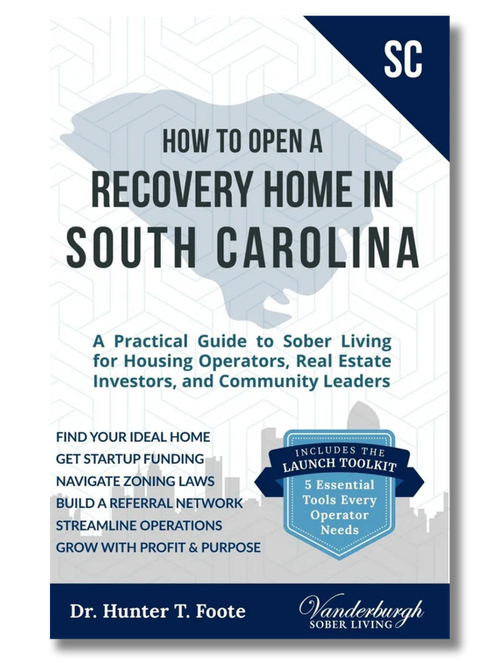
Opening a recovery home requires a clear understanding of state laws, local zoning rules, licensing requirements, funding options, and certification standards. VSL’s comprehensive guide is designed to help you build a compliant and sustainable sober living home with confidence and care. How to Open a Sober Living Home in South Carolina provides a step-by-step roadmap covering zoning approval, business registration, legal compliance, operational best practices, and positive community relations, all tailored to the regulatory environment in South Carolina.
📘 Get the Book: How to Open a Sober Living Home in South Carolina →