Find Recovery Houses in North Carolina
Sober Living in North Carolina: Find a Certified Sober House Near You
North Carolina is an ideal place to begin or continue recovery, offering a strong mix of supportive housing options, statewide recovery resources, and community-based care. Across the state, sober living homes provide stable, substance-free environments where people in recovery can build healthy routines, reconnect with work or school, and strengthen long-term sobriety.
With access to peer support networks, reentry services, and recovery-focused organizations, certified sober living in North Carolina is designed to help individuals move forward with confidence.
North Carolina also benefits from clear recovery housing standards, active oversight organizations, and a growing network of providers committed to safety and accountability. Whether you’re transitioning from treatment, reentering the community, or seeking structure after early recovery, certified sober living in North Carolina offers a balanced setting that supports independence while encouraging responsibility, connection, and continued personal growth.
Ready to begin your journey?
Browse Sober Homes in North Carolina →
What Is Sober Living?
Sober living homes in North Carolina, also called recovery residences, are supportive, drug- and alcohol-free homes for people in recovery. They are not treatment programs, but they often work alongside outpatient care, counseling, or peer support to help residents maintain sobriety and rebuild daily structure.
Residents typically follow house guidelines, share responsibilities, and participate in recovery-oriented activities. The goal is to create a safe, respectful living environment that supports long-term recovery while people work, attend school, or continue treatment.
Why Choose North Carolina for Sober Living?
North Carolina has a strong recovery ecosystem with statewide organizations, peer support networks, and reentry services that help people in recovery find stability and connection.
- Statewide standards and certification: North Carolina is home to a National Alliance for Recovery Residences (NARR) affiliate that promotes quality and accountability in sober housing.
- Strong peer support network: Certified Peer Support Specialists and community recovery organizations are available across the state.
- Reentry and recovery coordination: Transition services, recovery courts, and local reentry councils help justice-involved individuals find housing and support.
- Resource navigation: Tools like NC 211 and NCCARE360 help connect people to housing, treatment, and basic needs.
🤝 Start a Sober House in North Carolina →
Key Features of Sober Living Homes in North Carolina
Sober living homes vary, but many share common features designed to support recovery:
- Substance-free living environment
- Clear expectations and shared responsibilities
- Peer support and accountability
- Connection to outpatient care, meetings, or community resources
- House leadership or mentors who help maintain structure
You can learn more about how sober homes typically operate by reviewing Vanderburgh Sober Living’s approach to house rules and the role of house mentors in supporting residents.
North Carolina Association of Recovery Residences (NCARR) Certified Sober Homes in North Carolina
The North Carolina Association of Recovery Residences (NCARR) is the state’s NARR affiliate and works to promote safe, ethical, and supportive recovery housing by certifying sober living homes that meet nationally recognized standards.
Why Choose a North Carolina Association of Recovery Residences (NCARR)-Certified Sober House?
Certification helps residents, families, and referral partners identify homes that follow established recovery housing best practices.
- Clear standards for safety, operations, and resident rights
- Accountability through ongoing oversight and a grievance process
- Alignment with nationally recognized NARR standards
- Increased confidence for families and referral sources seeking quality housing
About the North Carolina Association of Recovery Residences (NCARR) Certification
NCARR certification is based on NARR standards, which outline different levels of recovery housing support and expectations for ethical operations. Certification focuses on creating a safe, respectful, and recovery-oriented living environment. While certification is not the same as clinical treatment or state licensure, it provides an important quality benchmark for sober living homes in North Carolina.
Find an NCARR Certified Home →
Types of Sober Living Homes in North Carolina
North Carolina offers several types of sober living homes designed to meet people where they are in recovery. These options vary based on structure, level of support, and the specific needs of residents, helping individuals and families find housing that aligns with their recovery goals and life circumstances.
Sober Homes for Justice-Involved Individuals
These homes support people returning to the community after incarceration or while under supervision. They often work alongside reentry programs and probation or parole requirements, helping residents maintain sobriety, rebuild routines, and reduce the risk of relapse during a high-transition period.
Post-Treatment Sober Homes
Post-treatment sober homes are designed for people stepping down from inpatient or intensive outpatient care. Residents can continue therapy or counseling while living in a structured, substance-free environment that supports long-term recovery.
Men’s and Women’s Sober Homes
Some sober living homes are gender-specific, creating spaces where residents may feel more comfortable focusing on recovery. These homes offer peer support among people with shared experiences while maintaining consistent recovery-focused expectations.
Family-Friendly and Specialized Homes
Certain sober homes are designed to accommodate parents or individuals with specific needs. Availability and structure vary by location, and families are encouraged to ask detailed questions about expectations, space, and support services.
Other Sober Living Options in North Carolina
Sober living homes can differ by region, level of structure, and population served. Availability may vary by city or county, so it’s important to explore local options and ask how each home supports recovery.
Recovery Resources in North Carolina
North Carolina offers a wide range of recovery and support resources that can complement sober living:
- North Carolina Association of Recovery Residences (NCARR): NCARR is the state’s NARR affiliate and works to certify and support ethical, recovery-focused sober living homes. It promotes quality standards, accountability, and resident protections across North Carolina.
- NCDHHS – Mental Health, Developmental Disabilities, and Substance Use Services: NCDHHS oversees statewide behavioral health and substance use services, including peer support programs and recovery-focused initiatives. It serves as a central hub for public recovery resources and guidance.
- NC 211 (United Way of North Carolina): NC 211 is a free, 24/7 referral service available statewide that connects people to housing, recovery support, food assistance, and other essential services based on local availability.
- NCCARE360: NCCARE360 is a coordinated care network that helps healthcare and community organizations connect people to social supports such as housing assistance, recovery services, and basic needs throughout North Carolina.
Ready to Find a Sober House in North Carolina?
The right sober house gives you structure, accountability, and people who understand what early recovery takes. Browse sober living homes across North Carolina to compare locations, house rules, and openings, and find the one that fits where you are in your recovery.
Starting a Sober House in North Carolina?
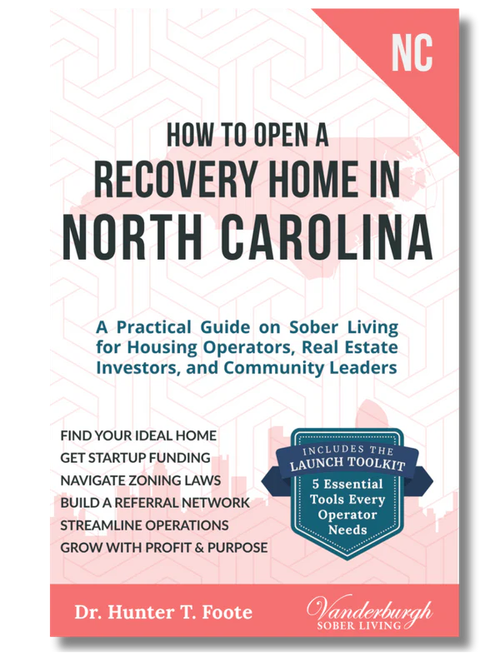
Opening a recovery home requires a clear understanding of state laws, local zoning rules, licensing requirements, funding options, and certification standards. VSL’s comprehensive guide is designed to help you build a compliant and sustainable sober living home with confidence and care. How to Open a Sober Living Home in North Carolina provides a step-by-step roadmap covering zoning approval, business registration, legal compliance, operational best practices, and positive community relations, all tailored to the regulatory environment in North Carolina.
📘 Get the Book: How to Open a Sober Living Home in North Carolina →