How to Start a Sober Living Home in North Carolina
Thinking about opening a sober living home in North Carolina? Certification is one step. Vanderburgh Sober Living helps operators work through the property, the entity, the policies, the certification application, and filling the beds.
The North Carolina Association of Recovery Residences (NCARR) leads North Carolina sober living certification through a state-level system aligned with standards from the National Alliance for Recovery Residences.
This guide is for residents, families, and referral partners who want to understand North Carolina sober living certification. It explains who certifies sober houses, what certification signals, and how to verify a sober living home in North Carolina.
Understanding sober house certification in North Carolina helps you make more confident decisions by showing what to look for and how to confirm a sober house is part of a trusted system.
Who Certifies Sober Living Homes in North Carolina?
The primary North Carolina certification agency for sober living homes is the North Carolina Association of Recovery Residences (NCARR).
It operates as the state-level organization responsible for setting standards, supporting quality, and overseeing a certification framework tied to national recovery housing guidelines. Through NCARR certification, sober houses in North Carolina align with a system designed to promote safety, ethical practices, and consistent recovery support.
As part of the NARR affiliate in North Carolina network, NCARR works within a national model where state organizations carry out certification and accountability at the local level. This structure helps ensure that sober living homes in North Carolina follow a shared set of expectations while still being evaluated through a state-based process.
To check whether a sober living home in North Carolina is listed through NCARR, you can:
- View the NCARR member directory
- Confirm whether the North Carolina sober house appears on the current NCARR listing
- Contact NCARR directly through its official website if additional verification is needed
This approach allows residents, families, and referral partners to rely on a centralized system when evaluating sober living options.
What Sober House Certification Means in North Carolina
Sober house certification in North Carolina reflects a connection to recognized standards, oversight, and accountability.
Through NCARR certification, a sober living home in North Carolina may demonstrate that it aligns with expectations developed at both the state and national levels.
Certification can signal that a North Carolina sober house is part of a system that values consistency and quality. This includes attention to how residents are supported, how environments are managed, and how recovery principles are applied in daily operations.
A key difference between a certified sober living home in North Carolina and one that simply claims to offer sober living is the presence of external alignment. NCARR certification connects a North Carolina sober house to a recognized framework, rather than relying only on internal claims about quality or structure.
Why North Carolina Sober House Certification Matters
North Carolina sober house certification plays an important role for people evaluating recovery housing options.
For Residents
For someone entering a sober living home in North Carolina, certification may point to a more structured and recovery-focused environment. It can reflect a setting where expectations, support systems, and daily operations are aligned with recognized standards.
For Families
Families often look for signs that a sober living home in North Carolina offers stability and consistency. NCARR certification can provide an added layer of confidence by showing that the sober house is part of a recognized system rather than operating independently without oversight.
This can help families feel more informed when comparing options and deciding where a loved one may receive support.
For Referral Sources
Professionals evaluating placement options often rely on structured indicators of quality. North Carolina sober house certification can help support decision-making by offering a consistent reference point tied to recognized standards.
For those working with referral sources, certification can help simplify the process of identifying sober living homes in North Carolina that align with expected practices and support models.
About NARR and Why It Matters in North Carolina
The National Alliance for Recovery Residences provides a national framework that supports recovery housing quality across the country. This organization established a standard that defines different levels of support and outlines expectations for recovery-focused living environments.
Many states operate through a NARR affiliate in the North Carolina model, where organizations like NCARR carry out certification at the state level. This structure allows sober living homes in North Carolina to be evaluated through a consistent framework while still being managed locally.
How to Open and Certify a Sober Living Home in North Carolina
Opening and pursuing NCARR certification for a sober living home in North Carolina involves preparation and alignment with established standards.
Opening a New Sober House in North Carolina
Before applying for sober house certification in North Carolina, operators typically prepare key elements of the sober living model.
- Define the recovery model: Establish the type and level of support aligned with NARR standards
- Develop structured policies: Create clear expectations, including documented house rules
- Prepare the living environment: Set up a safe and supportive space that reflects recovery-focused principles
- Align with standards: Review expectations tied to national and state-level frameworks
👉 Learn more about opening a sober living home in North Carolina with a step-by-step guide here: How to Open a Sober Living Home in North Carolina: A 2026 Complete Guide
Obtaining NCARR and State Certification
Once preparation is complete, the next step is pursuing NCARR certification for a sober living home in North Carolina.
- Submit application: Apply through the North Carolina Association of Recovery Residences
- Complete review process: Participate in evaluation aligned with NARR standards
- Receive listing status: Become part of the NCARR member directory if approved
- Maintain alignment: Continue operating in a way that reflects ongoing expectations and accountability
👉 Learn more about certifying a sober living home in North Carolina with detailed guidance.
How to Verify a Certified Sober Living Home in North Carolina
Knowing how to verify a certified sober home in North Carolina helps make informed choices.
- Check the official NCARR directory
- Confirm that the sober living home in North Carolina appears on the current list
- Review available details such as provider information and support level
- Contact NCARR directly if the listing is unclear or outdated
You can also review NCARR’s grievance process for additional context about accountability and oversight.
Ready to Certify Your Sober Living Home in North Carolina?
Certifying a sober living home in North Carolina involves understanding expectations, aligning with standards, and following a structured process. It requires careful preparation and a clear approach to meeting NCARR certification guidelines.
With the right foundation, a North Carolina sober house may provide a stable and supportive environment for individuals working toward recovery.
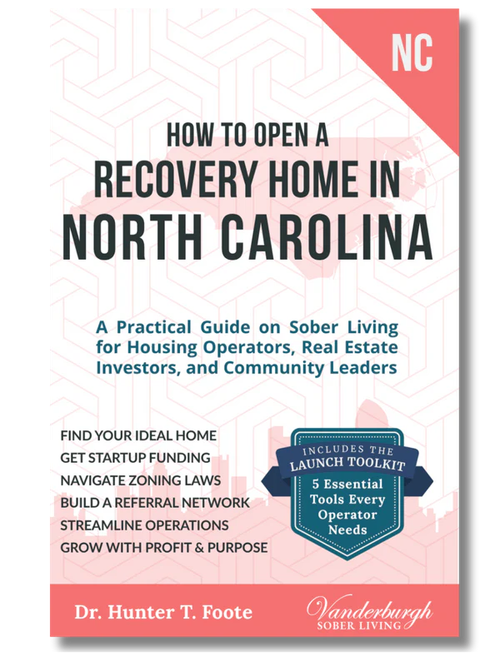
If you want a complete roadmap, explore the Vanderburgh Sober Living book on opening a sober living home in North Carolina, which covers setup, structure, and certification pathways in detail.