How to Start a Sober Living Home in Maryland
Thinking about opening a sober living home in Maryland? Certification is one step. Vanderburgh Sober Living helps operators work through the property, the entity, the policies, the certification application, and filling the beds.
Maryland does not have a NARR-affiliate, the type of state-chartered organization that handles sober living certification in many other states. What Maryland has instead is its own government-administered certification system that incorporates national standards. Understanding how that system works is the starting point for anyone evaluating Maryland sober living certification.
This guide is for residents considering a Maryland sober house, families evaluating credibility, and referral partners confirming a sober living home's legitimacy before placement. You will learn what Maryland's certification system looks like and what questions to ask before making a decision.
Does Maryland Have a NARR Affiliate for Sober House Certification?
No. Maryland does not have a NARR affiliate, and that distinction matters when evaluating the state's sober house certification.
In states with a NARR affiliate, that organization serves as an independent certifying body, conducting inspections, maintaining directories, and acting as a resource for residents, families, and referral partners.
Maryland does not have that kind of organization. NARR itself does not step in to certify individual sober living homes in states without affiliates. According to NARR's certification page, certification is handled exclusively through state affiliates, meaning there is no alternative NARR pathway for Maryland sober homes.
What Maryland has is a state-administered program called the Maryland Certification of Recovery Residences (MCORR), run by the Maryland Department of Health's Behavioral Health Administration (BHA). It uses the same NARR 2015 quality standards that NARR affiliates apply in other states. The certifying body is different; the standards are the same.
What Sober House Certification Means in Maryland
Maryland has a defined, legally grounded certification process, but it is not required for every sober living home operating in the state.
Under Maryland law, certification through the Maryland Certification of Recovery Residence (MCORR) is required only when a sober house wants to:
- Accept state funds, including Medicaid dollars
- Represent itself publicly as a "certified recovery residence"
Sober homes that do not require certification and may operate without it. This means that when a Maryland sober house uses the term "certified," it carries a specific legal meaning: it holds a Certificate of Compliance issued by the BHA following a completed application, documentation review, and on-site inspection. A sober living home without that credential cannot legitimately use that label.
The absence of certification does not automatically indicate a poor-quality sober living home. It does mean there has been no state-level verification of that sober home's standards, policies, or physical conditions.
Why This Matters When Choosing a Sober Living Home in Maryland
Maryland certification status affects what you can know about a sober living home before someone moves in. The stakes and relevant questions differ depending on your role.
For Residents
A certified Maryland sober house has been inspected by the state, carries required insurance, and operates under documented policies consistent with national quality standards. Certified Maryland sober living homes are required to have:
- Written admissions policies
- Grievance procedures
- Relapse response protocols
Residents in certified sober living homes also have access to a formal oversight structure through the BHA if problems arise.
For Families
A Maryland sober living home holding a current Certificate of Compliance has passed a site inspection, demonstrated code compliance, and shown that its policies meet state standards.
Maryland certification is renewed annually, so a compliance record is updated regularly rather than being a one-time credential. When evaluating an uncertified Maryland sober home, families are working without third-party verification, which requires more direct investigation to reach a comparable level of confidence.
For Referral Sources
Referral sources, including behavioral health providers, justice agencies, and treatment programs, can use the BHA's public directory to confirm a sober house's certified status before placement.
Referral partners should also be aware that Maryland certification determines which sober living homes are eligible to receive placements through Maryland RecoveryNet (MDRN), the state-funded program connecting eligible individuals in early recovery to certified housing. A non-certified Maryland sober home will not have access to that funding support for residents.
What Verification Options Exist for a Sober House in Maryland?
Maryland offers several practical, official tools for verifying a sober living home's status.
- BHA public directory: The Maryland Department of Health's Behavioral Health Administration maintains a public list of certified recovery residences. This is the most direct verification tool available in the state.
- Unannounced inspections: Certified sober living homes are subject to ongoing oversight. The BHA or an approved contractor may inspect a certified Maryland sober house at any time without prior notice, including reviewing operational records.
- Oxford House network: Sober homes in the Oxford House network operate under a separate, independent system and are exempt from MCORR certification. Oxford House maintains its own charter and verification process distinct from the BHA framework.
About NARR and Why the Missing NARR Affiliate in Maryland Matters
The National Alliance for Recovery Residences is a nonprofit organization that sets national quality standards for recovery housing and charters state-level affiliates to administer certification within their states. In states with a NARR affiliate, residents and families typically have a single well-known organization to contact for verification.
Because the BHA incorporated NARR standards directly into state regulation, the same quality benchmark underlies Maryland's MCORR certification as that which underlies NARR affiliate certification elsewhere. Verification runs through a government agency rather than a NARR-chartered nonprofit, but the standards applied are the same.
How to Verify Whether a Sober Living Home in Maryland Is Legitimate
Verifying a Maryland sober house is straightforward when you know where to look.
- Check the BHA's public certified recovery residence directory and search for the Maryland sober home by name.
- Confirm the certification is current. Maryland certifications renew annually, so an expired certificate means the sober living home is no longer in good standing.
- Ask whether the sober living home is enrolled in Maryland RecoveryNet (MDRN). MDRN enrollment requires MCORR certification, making it a secondary indicator of certified status.
- Ask about the Maryland sober living home's NARR level designation. Maryland follows the NARR four-level framework, from peer-run sober homes (Level I) to clinically integrated residences (Level IV), which indicates the degree of structure and support the sober living home provides.
What to Ask Before Choosing a Sober Living Home in Maryland
Before committing to a Maryland sober house, a short set of direct questions can reveal a great deal about how it operates.
- Is the Maryland sober living home MCORR-certified, and does it hold a current Certificate of Compliance?
- Is the sober house enrolled in Maryland RecoveryNet (MDRN)?
- Can you review the written house rules, including policies on abstinence, guests, curfews, and relapse response?
- How are grievances and complaints handled?
- Are residents given written information about their rights at move-in?
- What NARR level does the Maryland sober living home operate at, and does that match the level of support needed?
Need Help Evaluating a Sober Living Home in Maryland?
Maryland's lack of a NARR affiliate can make the certification landscape feel unclear, but the tools to make a well-informed decision are available and tied to official state records. Certified sober living homes in Maryland have been inspected and verified by the state health department, and the BHA directory gives anyone a reliable way to check a sober home's status before making a decision.
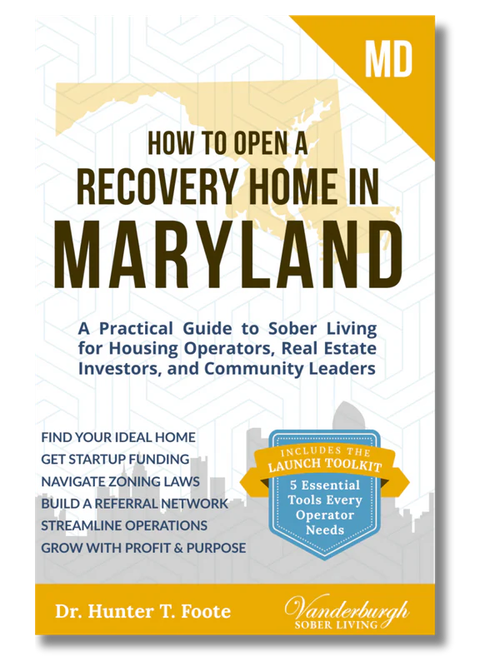
If you are also exploring the operator side, Vanderburgh Sober Living has published a guide on how to open a sober living home in Maryland that covers the certification process, standards alignment, and operational requirements.