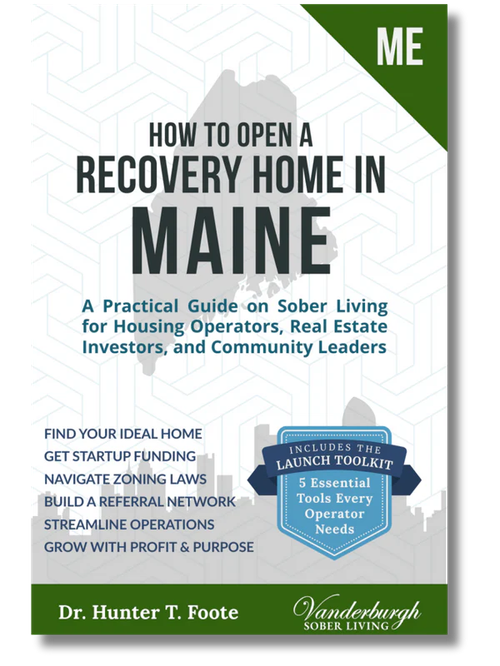
How to Start a Sober Living Home in Maine
Thinking about opening a sober living home in Maine? Certification is one step. Vanderburgh Sober Living helps operators work through the property, the entity, the policies, the certification application, and filling the beds.
Sober house certification in Maine is handled through the Maine Association of Recovery Residences (MARR), which serves as the official NARR affiliate and helps connect sober living homes to consistent guidelines for safety, structure, and ethical operations.
This guide is for residents, families, and referral partners who want to understand Maine sober living certification. It explains what certification means, why it matters, and how to verify whether a sober home is certified.
By understanding how certification works, you can make more confident decisions when choosing or recommending a sober living home in Maine.
Who Certifies Sober Living Homes in Maine?
Sober living homes in Maine are certified through the Maine Association of Recovery Residences (MARR). It is a confirmed NARR affiliate and serves as the primary Maine certification agency for sober living homes. Its role is to oversee certification based on nationally recognized recovery housing standards and to promote ethical and safe sober living environments.
MARR maintains a public directory where users can search for certified sober homes. This is one of the most important tools for verifying whether a home meets Maine sober living certification standards.
What Sober House Certification Means in Maine
Sober house certification in Maine is a way to signal that a home has been reviewed against established standards, rather than simply claiming to offer sober living.
Certification through MARR reflects alignment with national standards developed by NARR. These standards focus on creating safe, structured, and recovery-focused environments for people in recovery.
At a practical level, certification may indicate:
- The home follows recognized sober living home standards
- The environment supports sober, substance-free living
- House rules and operations are reviewed for consistency and accountability
- The home aligns with ethical guidelines designed to protect residents
A certified sober living home in Maine is different from a home that simply advertises sober living. Certification involves an inspection and review process, while non-certified homes may not have gone through any formal evaluation.
This distinction is important for anyone trying to assess the credibility and quality of a sober house.
Why Maine Sober House Certification Matters
Understanding why certification matters can help people make better decisions when choosing or recommending a sober living home.
For Residents
For individuals in recovery, certification may point to a more structured and supportive living environment.
Certified sober living homes in Maine are expected to follow standards that promote:
- A substance-free living space
- Clear house rules and expectations
- Respect for residents’ privacy and dignity
- A stable and recovery-focused community
These elements can help create an environment where people feel supported as they rebuild their lives.
For Families
Families often want reassurance that their loved one is entering a safe and well-managed environment.
Maine sober house certification can provide added confidence by showing that:
- The home has been reviewed using recognized standards
- Ethical practices and resident protections are emphasized
- The home is part of a broader system connected to national guidelines
This can make it easier for families to evaluate options and feel more comfortable with their decision.
For Referral Sources
Professionals and referral partners need reliable information when recommending sober living homes.
Certification matters because it helps:
- Identify homes that meet consistent standards
- Reduce uncertainty when making placement decisions
- Support referrals to environments aligned with recovery best practices
Maine’s Department of Health and Human Services also directs people to MARR-certified homes as part of its recovery support resources, reinforcing the role of certification in trusted referrals.
About NARR and Why It Matters in Maine
The National Alliance for Recovery Residences (NARR) plays a central role in shaping sober living certification across the country.
NARR develops national standards for recovery housing, but it does not directly certify individual sober living homes. Instead, it works through state affiliates like MARR.
In Maine, this means:
- MARR applies NARR standards at the state level
- Certification decisions are made locally but follow national guidelines
- Sober living homes are evaluated using a consistent framework
This connection helps bring both local oversight and national credibility to Maine sober living certification.
How to Open and Certify a Sober Living Home in Maine
Opening and certifying a sober living home in Maine involves preparing the home, aligning with standards, and completing a structured review process through MARR.
Opening a New Sober House in Maine
Before applying for certification, operators typically prepare their sober living home to meet expected standards.
- Establish a sober living model. Define the purpose of the home as a substance-free, recovery-focused environment.
- Develop house policies and structure. Create clear rules, expectations, and operational guidelines for residents.
- Prepare the property. Make sure the home is safe, organized, and ready for inspection.
- Align with ethical standards. Review and follow the Code of Ethics tied to NARR-based certification.
These steps help position the home for a smoother certification process.
Obtaining MARR and State Certification
Once the home is prepared, the certification process moves forward through MARR.
- Apply for MARR membership. Begin the process by submitting an application to MARR.
- Submit required documentation. Provide materials showing alignment with NARR standards and ethical guidelines.
- Complete review and inspection. MARR arranges a physical inspection to evaluate the home’s operations and environment.
- Receive certification decision. Homes that meet standards may be granted certification, typically valid for a set period.
- Maintain certification over time. Continued compliance and renewal help keep the home in good standing.
Operators who want deeper guidance can learn more in this detailed guide on certifying a sober living home in Maine: How to Certify a Sober House in Maine with MARR
How to Verify a Certified Sober Living Home in Maine
Verifying a certified sober home in Maine is a straightforward process when you use official resources.
The most reliable way to confirm certification is through the MARR directory. This public tool allows you to search for sober living homes that have been reviewed and certified.
To verify a home:
- Check the official MARR directory
- Confirm the home appears on the current list
- Review available details, such as location or program level
- Contact MARR if information is unclear or missing
MARR also encourages people to ask directly whether a sober house is certified. This simple step can help clarify whether the home meets Maine sober living certification standards.
Get Started with Sober House Certification in Maine
Certifying a sober living home in Maine involves understanding the standards, preparing the home, and following a clear process through MARR. With the right approach, the process becomes more manageable and aligned with established expectations.
With the right structure in place, sober living homes in Maine may provide safe, stable, and supportive environments for people working toward recovery.
If you are looking to open or improve a sober living home in Maine, explore our full guide to the process and what to expect. It covers preparation, certification steps, and how to stay compliant over time.