How to Start a Sober Living Home in Colorado
Thinking about opening a sober living home in Colorado? Certification is one step. Vanderburgh Sober Living helps operators work through the property, the entity, the policies, the certification application, and filling the beds.
The Ohio Recovery Housing – Colorado (OHR-C) is the state's certification agency for sober living homes and operates in alignment with NARR standards. This guide is designed to help residents, families, and referral partners understand what certification means, how to verify certified sober houses in Colorado, and how to open and certify a sober living home in the state.
Who Certifies Sober Living Homes in Colorado?
The Ohio Recovery Housing – Colorado (OHR-C) serves as the primary certification agency for sober living homes in the state, operating under a formal contract with the Behavioral Health Administration (BHA).
OHR-C is a NARR-affiliate in Colorado and the BHA-approved certifying body responsible for evaluating whether sober living homes in the state meet the quality standards established by the National Alliance for Recovery Residences (NARR).
OHR-C manages the certification process from application through inspection, maintains the public directory of currently certified Colorado sober homes, provides training and technical assistance to operators, and administers a formal grievance process that gives residents a structured channel for reporting concerns.
The BHA is the state government agency that authorizes and contracts with OHR-C. The BHA does not conduct certifications directly, but its official certified recovery residences page serves as the authoritative state government reference confirming OHR-C's current role.
Here are practical ways to confirm OHR-C certification status using official resources:
- Visit the OHR-C certified residence directory to search active Colorado certified sober living homes by city, name, program type, or bed type
- Confirm that a specific sober living home in Colorado appears on the current active certified list before making a housing or placement decision
- Contact OHR-C with questions about a specific Colorado sober living home's certification status
- Reference the BHA's official page as the authoritative state-level resource for confirming which certifying body is currently approved
Together, OHR-C and the BHA give residents, families, and operators a transparent, publicly accountable system for identifying credible sober living homes in Colorado.
What Sober House Certification Means in Colorado
OHR-C certification signals that a sober living home in Colorado has been reviewed against established national standards and found to meet requirements covering safety, ethical operations, structured peer support, and accountability in day-to-day governance.
Under Colorado law, House Bill 19-1009, which took effect January 1, 2020, any facility using the terms "recovery residence," "sober living facility," "sober home," or a substantially similar term is required to hold certification from an approved certifying body or qualify for a specific statutory exemption. This makes Colorado sober living certification part of one of the few mandatory frameworks of its kind in the country.
An uncertified sober home using these protected terms may not legally receive referrals from licensed healthcare providers or licensed health facilities in Colorado. By contrast, a certified sober house in Colorado has met the minimum standards required to participate in the state's referral ecosystem and has opened itself to ongoing oversight and renewal.
Why Colorado Sober House Certification Matters
Colorado sober house certification carries real, practical weight for every person involved in a housing decision: the individual seeking recovery, the family weighing options, and the professional coordinating a placement.
For Residents
For someone choosing a sober living home in Colorado, OHR-C certification may indicate that a sober house has been independently evaluated against established quality standards.
Certified sober living homes are expected to maintain a substance-free environment, support peer accountability, follow documented policies, and provide residents with access to a formal grievance process if issues arise. These conditions create a more predictable, structured environment during one of the most vulnerable stages of recovery.
For Families
For families researching a Colorado sober house on behalf of a loved one, OHR-C certification offers a concrete and verifiable starting point. Rather than relying solely on a sober home's own marketing materials, families can look up in the official OHR-C directory to confirm its active certification status.
For Referral Sources
For referral sources such as treatment counselors, discharge planners, and healthcare professionals, Colorado sober living certification is directly connected to legal compliance. State law prohibits licensed providers from referring individuals to uncertified sober living homes using protected terms.
Placing people in OHR-C-certified homes in Colorado helps referral partners fulfill their professional obligations while demonstrating a consistent commitment to resident safety and ethical placement practices.
About NARR and Why It Matters in Colorado
The National Alliance for Recovery Residences is a national nonprofit organization whose mission is to improve access to quality recovery residences through standards development, education, research, and advocacy.
NARR does not certify individual sober living homes directly. Instead, it supports a network of state-level affiliate organizations that apply the NARR Standard within their states and manage the certification process locally.
Colorado's certification framework is built on the NARR Standard, with OHR-C serving as the NARR-aligned certifying body authorized by the state BHA. Many states across the country use NARR affiliates or NARR-aligned organizations to certify sober living homes, creating a degree of consistency in quality expectations that crosses state lines.
In Colorado, that alignment gives OHR-C certification both state legal authority and national standards credibility, which matters to residents, families, and referral partners alike.
How to Open and Certify a Sober Living Home in Colorado
Opening and certifying a sober living home in Colorado involves two parallel tracks: preparing the sober house and its operations to meet applicable standards, and moving through the formal OHR-C certification process.
Opening a New Sober House in Colorado
Before applying for OHR-C certification, operators are expected to have a fully operational, standards-ready sober house in Colorado. The following steps reflect standard preparation:
- Establish your legal entity. Register your organization with the Colorado Secretary of State and obtain an Employer Identification Number from the IRS.
- Develop policies and procedures. Create documented house rules, resident agreements, a code of conduct, and discharge policies that align with OHR-C and NARR quality standards.
- Secure compliant housing. The property should meet local fire codes, building codes, and safety requirements, including working smoke alarms, fire extinguishers, and clear emergency egress paths in sleeping areas.
- Build a peer-supported recovery structure. The Colorado sober living home should center substance-free living, peer accountability, connection to mutual aid groups, and a recovery-oriented culture aligned with the social model of recovery.
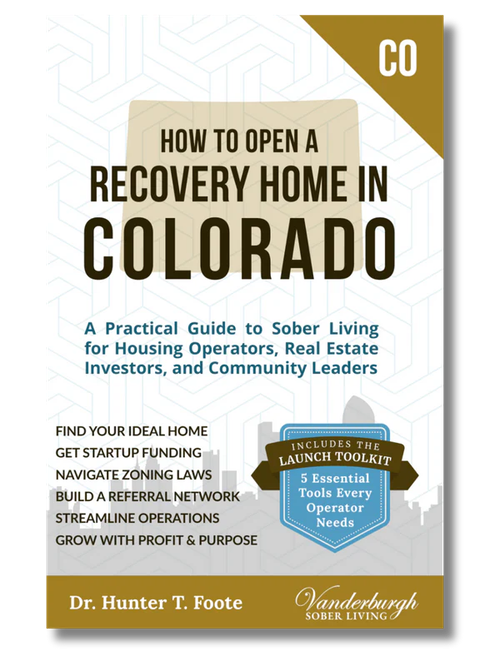
👉 Learn how to open a sober living home in Colorado with this guide: A Practical Guide to Opening a Sober Living Home in Colorado
Obtaining OHR-C Certification and Colorado Approval
Once the sober living home in Colorado is operationally ready, operators may begin the formal OHR-C certification process. The following steps reflect the pathway as confirmed by OHR-C's official resources:
- Submit the application. Complete and submit the OHR-C application.
- Provide required documentation. Submit operational policies, resident agreement templates, and other materials required during the review.
- Pass the site inspection. OHR-C conducts a physical on-site inspection to confirm the sober living home in Colorado meets safety and quality standards before certification is granted.
- Receive certification and directory listing. Upon approval, the sober living home is added to the publicly searchable OHR-C directory of certified Colorado sober houses.
- Maintain active certification. Certified sober living homes in Colorado are subject to ongoing compliance requirements, periodic renewal, and continued adherence to OHR-C and NARR standards.
👉 Start the official OHR-C application to begin the Colorado certification process. Learn more in this guide: How to Certify a Sober House in Colorado
How to Verify a Certified Sober Living Home in Colorado
Knowing how to verify a certified sober home in Colorado takes only a few steps. The following resources are available to residents, families, and referral partners:
- Search the OHR-C certified residence directory by city, sober living home name, program type, or bed type to find actively certified Colorado sober houses
- Confirm that the Colorado sober living home appears on the current, active certified list rather than a historical or outdated entry
- Review any available OHR-C certification level or status details associated with the listing
- Contact OHR-C if a Colorado sober house's status is unclear, a listing appears outdated, or you need help interpreting certification details
- Cross-reference against the BHA's official page, which serves as the authoritative state government reference
Ready to Certify Your Sober Living Home in Colorado?
Certifying a sober living home in Colorado requires understanding state requirements, meeting OHR-C and NARR standards, and working through a defined process from preparation through inspection and approval. The pathway is structured, and having the right resources in place makes the process significantly more manageable.
With a strong operational foundation, sober living homes in Colorado may provide safe, stable, and recovery-supportive environments for people rebuilding their lives after substance use disorder.
Vanderburgh Sober Living's guide to opening a sober living home in Colorado walks operators through the full picture: planning the operation, developing compliant policies, preparing for OHR-C inspection, and achieving and maintaining certification.